Today, SANOVO TECHNOLOGY provides an egg packaging solution where changeovers now happen automatically, accurately, and without manual intervention. At the heart of the machine are two compact LA21 actuators with IO-Link support, delivering precise, repeatable positioning.
Despite strict space constraints, the LA21 did not only fit - but it also replaced complexity, eliminating external hardware and enabling a smarter machine.
SANOVO TECHNOLOGY A/S
Application: Egg packaging machine
Products in use: LA21, IO-Link
Country: Denmark
The challenges



The solution

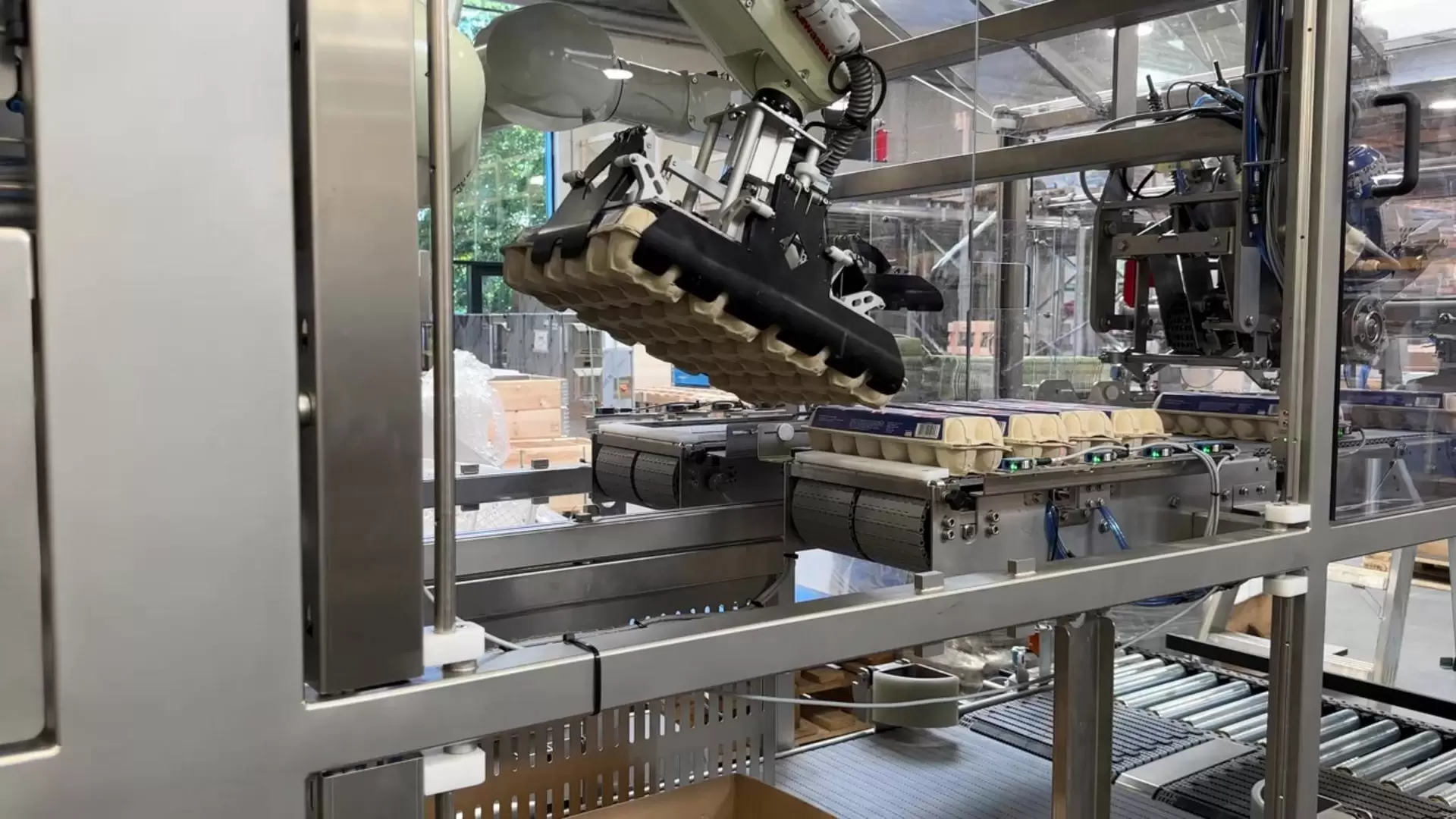
The LA21 delivered exactly that. The actuators execute the movement precisely and repeatably – without manual adjustment.
The operator simply selects the right recipe on the HMI, enabling changeovers at the push of a button and eliminating the risk of errors. This is made possible by pre-programmed recipes in the PLC, where each format defines its own positioning parameters.
A cleaner machine design
External components become unnecessary when intelligence is built into the actuator. This allows engineers to reduce mechanical complexity, simplify the design, and lower overall system costs:
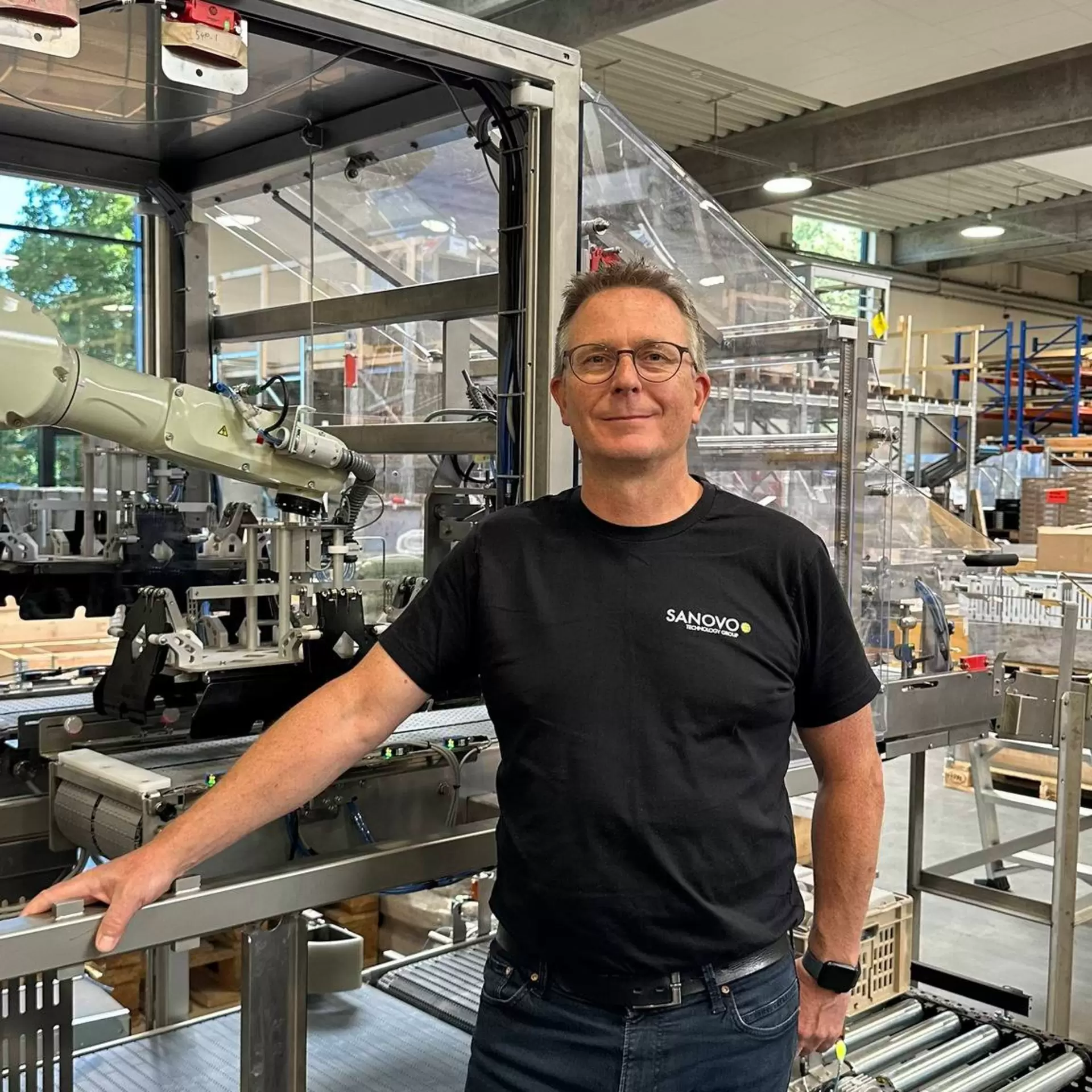
- It makes the work simpler for the engineer: “We have removed a significant amount of mechanics, cylinders and sensors in the new solution,” Frank says. The mechanical layout became simpler, assembly faster, and servicing easier.
- It delivers a tangible cost benefit: “All else being equal, we have saved approximately DKK 2,000 EUR per machine in components and labor hours,” Frank explains.
– all because the LA21 combines controller, interface, and key functions in one integrated unit. Naturally, this simplification also carries over to the electrical and control side.
Easy to integrate – ready to perform
Instead of spending time on integration and basic functionality, engineers can focus on what really matters: Optimizing machine performance.
For SANOVO, this naturally led to the choice of an electric solution:
Easy to integrate At SANOVO, recipe handling and control logic remain in the PLC, where automation engineers expect them to be. “We already use IO-Link extensively at SANOVO, so it was a very natural choice,” Frank explains. “It makes integration simple and gives us strong possibilities for diagnostics.”
Diagnostics The actuator also simplifies service and support. “In many cases, we can go online to the machine and see what the problem is instead of sending a technician out to the customer.”
Run to position From a control perspective, the LA21 behaves like a standard IO-Link device: When a recipe is activated, the PLC sends the corresponding position setpoint, and the actuator executes the movement while returning status and diagnostic information.
Protection The actuator operates intelligently as it detects resistance and stops safely: “We run the actuator at low speed and with current limiting, so if something gets trapped, it stops and reports a fault,” Frank says. “If, for example, the wrong case enters the machine, we can detect it via the current consumption.” This not only protects the robot tooling and the machine—it also contributes to far more robust operation.
The sweet spot: Simple like pneumatic, smart like servo
Pneumatics
were ruled out early because: “It is difficult to achieve ± a few millimeters with a pneumatic cylinder, especially when you have many different set positions,” Frank explains.
A servo solution
was technically feasible, but it would introduce additional complexity, cost, and space requirements – all of which were critical constraints in the existing machine layout. “If I had built this as a servo solution, it would have been much more complicated,” Frank says.
Going electric: The choice fell on the LA21 electric linear actuator from LINAK because: “The actuator gives us the precision and control we needed. There are very few alternatives that deliver the same functionality in such a compact format.”
Future-proof
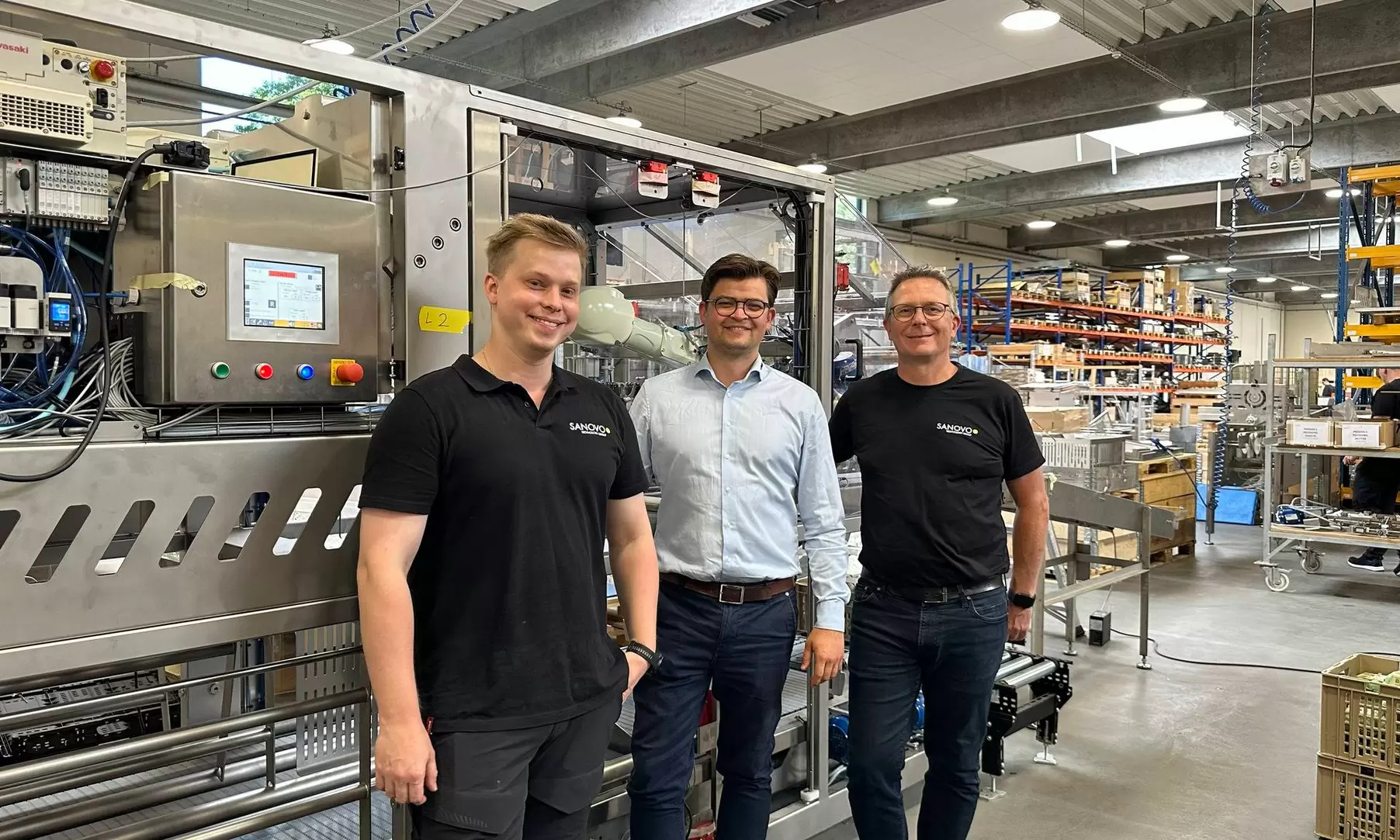
Looking ahead, Frank already sees broader potential for LINAK IO-Link actuators in similar applications: “It already looks very promising—and I can definitely see this solution being used in many more applications.”
For SANOVO, the project demonstrates how compact electric actuators can replace both the limitations of pneumatic solutions and the complexity of servo systems—enabling a simpler and more flexible approach to machine design.