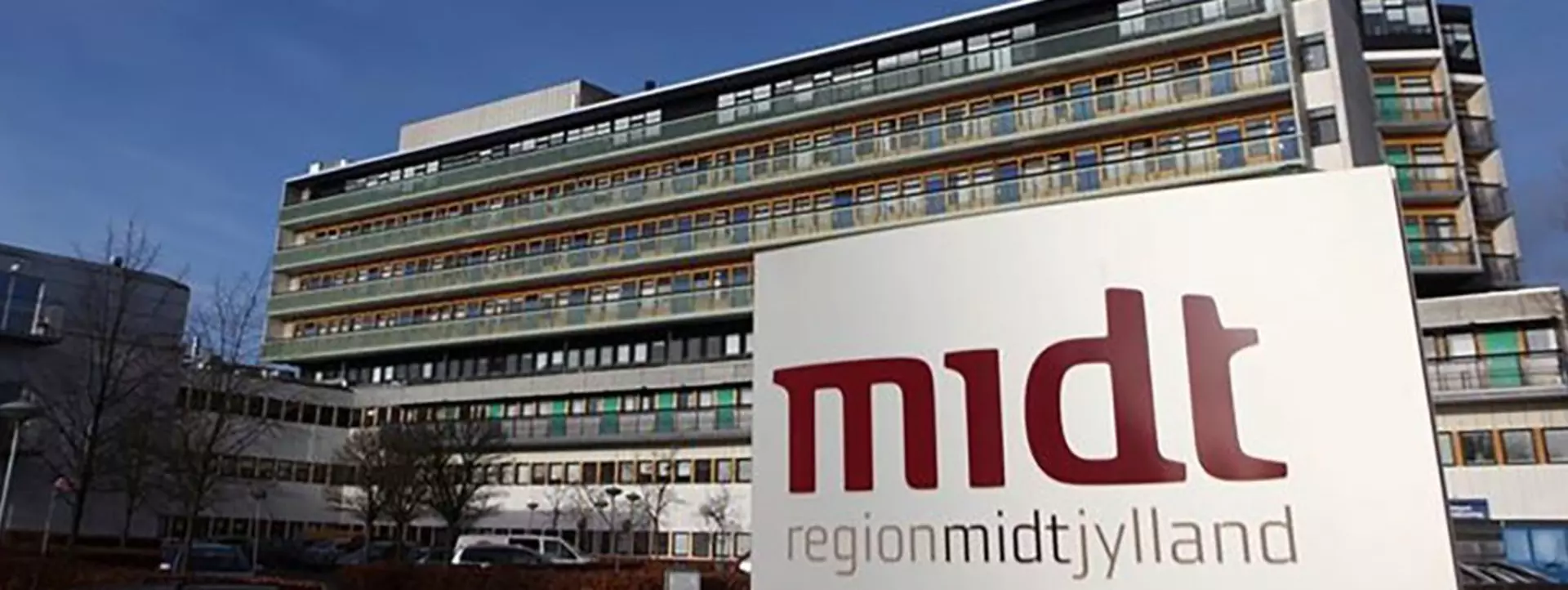
Every year approx. 3,000 people in Denmark die because of an infection they have acquired in the hospital. This figure is 18 times higher than the number of people who die in traffic accidents. In the regional hospital in the Danish city of Horsens, they're trying to change this.
The fight against dangerous bacteria
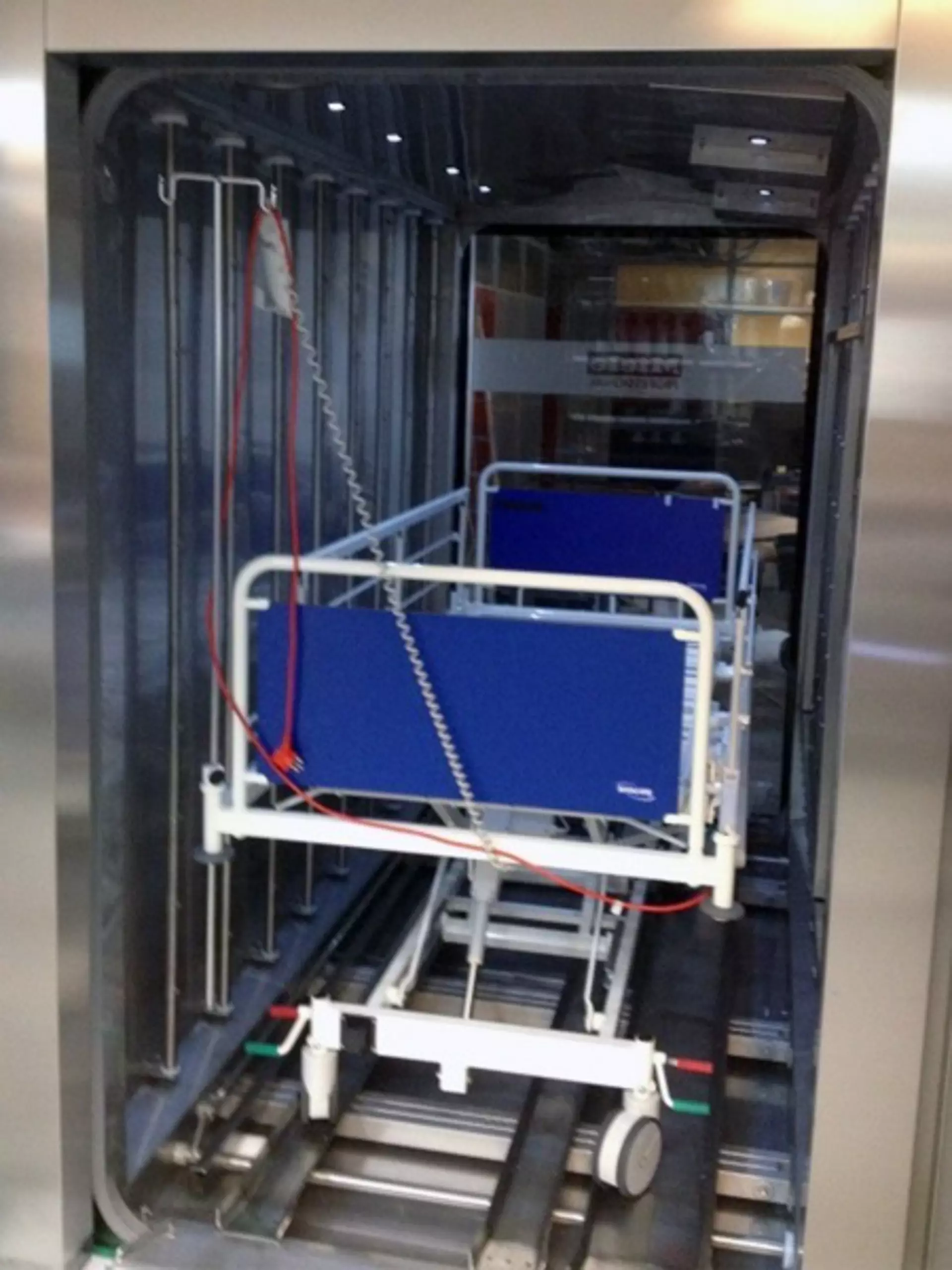
Welcome to the long corridors in the basement of the hospital where the tour starts. This is where the hospital’s service staff work to make daily operations run smoothly. Behind two of the doors is the hospital’s wash tunnel, an advanced automatic wash system that cleans everything from beds to ceiling sheets in the operating rooms. The wash tunnel is just one of the many initiatives the Regional Hospital is taking to increase hygiene.
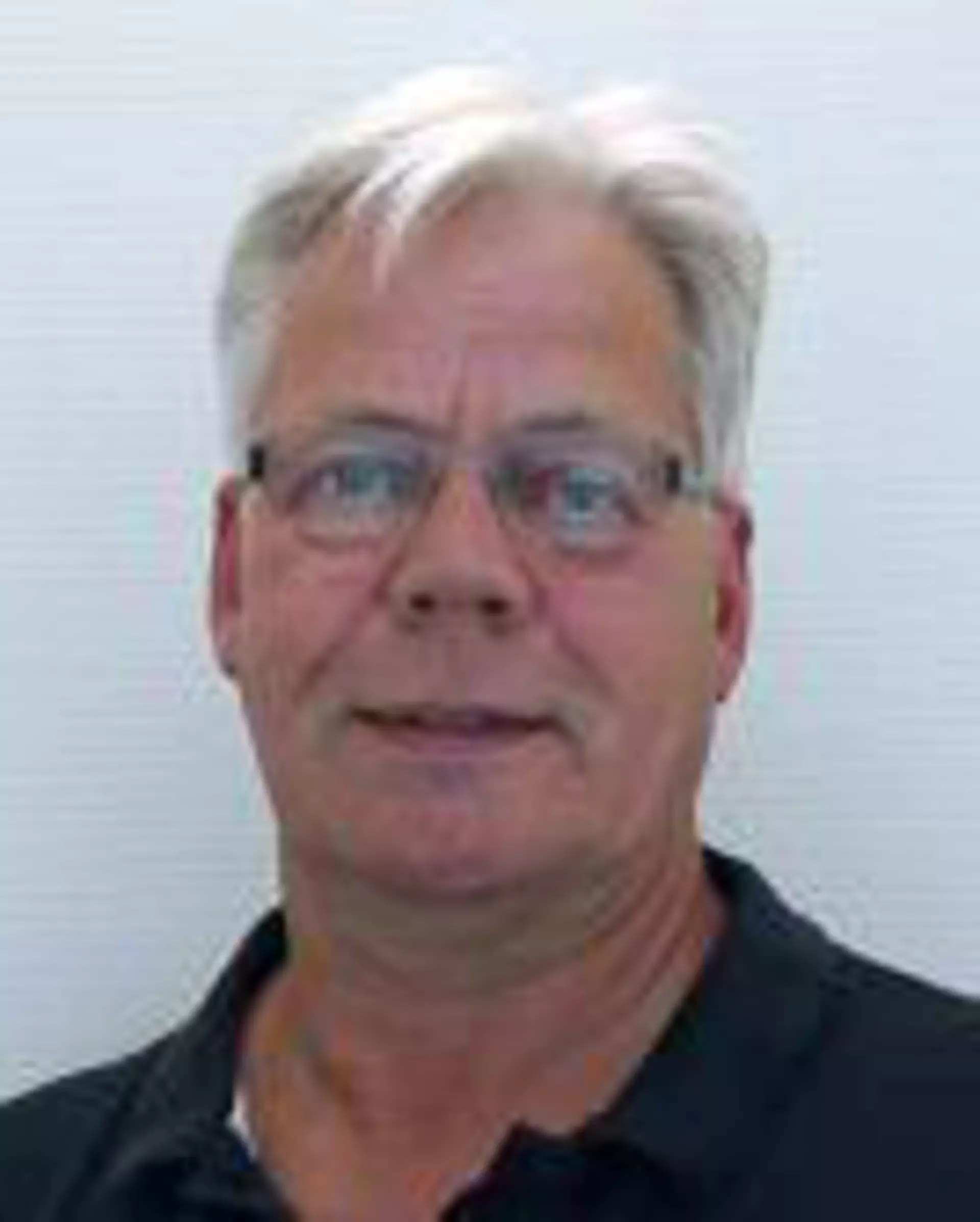
After 17 years in the cleaning industry within hospitals and slaughterhouses, Søren Møller became Service Manager at the Regional hospital in Horsens, where he has worked for the past 21 years. He made the decision to buy the washing tunnel in 2015.
”It all started with the establishment of a manual washing system, and everything was ready. After we had hung up the bed, it was clear that manual washing could not be done satisfactorily and we started to think of machines,” says Søren Møller and continues:
”We created a specification document in which we detailed our requirements for the amount of water, soap, electricity and wash time based on 15,000 washes a year. We compared the various results and, of course, chose the one that made best sense. We are excited about the opportunities this opens up and many other regions and hospitals came to see the washing tunnel.”
High demands on washability
When Søren Møller started to investigate the market he was really just looking for a bed washer. But, it soon became clear to him that the new machine could be useful in many more areas. Therefore, the hospital decided to invest in another machine in connection with the expansion of the hospital.
”There is focus on the fact that future aids and materials are machine-washable because this makes them much cleaner. The machine cleans many of the things that were previously uncleaned or were cleaned by hand. Today we wash several different things in the wash tunnel, and it will definitely evolve once another machine is up running”.
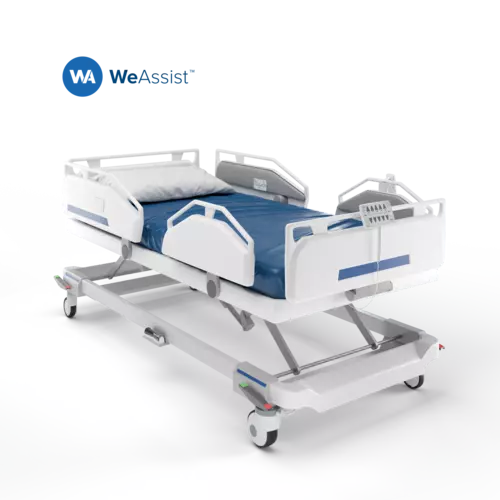
The beds at the Regional Hospital in Horsens are equipped with actuator systems from LINAK so that they can be adjusted to the needs of the individual patient. Other aids are also equipped with the systems and, as these aids are incorporated in the wash tunnel, more demands are placed on future solutions chosen by the hospital, stresses Søren Møller.
”It is an absolute must that LINAK factors washability into its systems. We would not buy the beds or aids on which they are placed if they were not washable. All items on the bed must be able to be washed in the washing tunnel, otherwise it will not work. Previously, the bed was washed by hand, but it was difficult to achieve a satisfactory result. So, from a hygienic point of view, it is clearly a huge advantage when our equipment can be washed in the washing tunnel,” he says, and elaborates:
”It is a legal requirement that hygiene is up to standard. We work according to a hospital patient safety model, where we focus on, among other things, not passing on avoidable infections to patients. Therefore, we also follow the National Infection Hygienic Guidelines from the Danish Research Institute under the Danish Ministry of Health (Statens Serum Institut). For example, we review 250 rooms four times a year in accordance with INSTA800, which is a common Nordic standard for measuring the quality of cleanliness. Thus, we make sure that the cleaning complies with the standard.”
Greater focus on improved hygiene
But, Søren Møller does not only see large pitfalls in relation to hygiene when washing beds and other aids. At the hospital in Horsens, cleaning is carefully delegated in areas of responsibility among the service staff and care staff. It requires that both parties are constantly aware of who is responsible for what. This helps ensure that we solve all issues satisfactorily and that care personnel are used sensibly.
The main difference Søren Møller has seen over the past 10 years is the increased focus on improving hygiene in hospitals. "Today one thought is always part of my decision making when I buy, and that is whether the items can be cleaned. We must be able to clean all corners and hooks efficiently. Otherwise, they are not suitable for use in a hospital,” Søren Møller makes clear.
Washability at LINAK
As a developer and manufacturer of world-class electric actuator systems for hospital applications LINAK feels obligated to participate in the fight to help hospitals improve hygiene.
Naturally, LINAK actuator solutions meet all international norms and standards for washability. However, some of our products meet an even higher standard because we test significantly more than the 2017 norm prescribes.
We call this stringent requirement LINAK IPX6 Washable DURA™.
Related applications
CA30
Control boxes
2-channel IPX6 Washable DURA™ control box for LINAK actuators. Comes with unique slide-on brackets for easy mounting, integrated cable lock system, and SMPS.
- 2 channels, analogue
- Power: 120 W Switch Mode Power Supply
- IPX6 Washable DURA™
CA40
Control boxes
4-channel IPX6 Washable DURA™ control box for electric actuators. Comes with unique slide-on brackets for easy mounting, integrated cable lock system, and SMPS.
- 4-channel, analog
- Power: 120 W effective Switch Mode Power Supply (SMPS)
- IPX6 Washable DURA™
CO61 MK2
Control boxes
Innovative 4-channel OpenBus™ control box for programmable actuator systems in healthcare. Ideal for hospital beds thanks to the IPX6 Washable DURA™ water protection. Comes with full bridge, optional Bluetooth technology, SMPS and intuitive cable management.
- 4-channel OpenBus™
- Power: 200 W Switch Mode Power Supply (SMPS)
- IPX6 Washable DURA™
LA40
Linear actuators
Durable actuator with powerful lift (up to 8,000 N) made for a range of healthcare applications, such as beds, couches, and chairs for treatment, wheelchairs, operating tables, patient lifts, and dental chairs.
- Max. load: 8,000 N
- Max. speed: 16.0 mm/s
- IPX6 Washable DURA™
HB80
Controls
IPX6 Washable DURA™ handset control for LINAK actuator systems in hospital beds, treatment couches, or patient lifts. Comes with 10-12 ergonomic buttons and optional back light function.
- OpenBus™
- Up to 12 buttons
- IPX6 Washable DURA™
UBL2
Accessories
The Under Bed Light, UBL2, provides powerful multicolor lighting with effective light distribution for hospital and care beds equipped with LINAK actuator systems. UBL2 features an optional IPX6 Washable DURA™ classification.
- Multicolor light
- Customizable
- Status by color
ACO
Controls
Attendant Control OpenBus (ACO) is a flexible control unit with numerous optional functions. Can also be used as handset keys and/or lock-out controls. Compatible with OpenBus control boxes.
- OpenBus™
- Up to 20 buttons
- IPX6 Washable DURA™
FS3
Controls
The LINAK FS3 is a foot switch control designed for medical equipment and healthcare applications. It allows staff / practitioners to have both hands free when attending to the patient or client. This highly ergonomic control comes with one or two channels as standard, and is also available in a wireless version.
- Analogue, OpenBus or Wireless
- Unique design
- Bed or floor model
HD80
Controls
LINAK HD80 is a durable handset control for linear actuators in medical applications across. Comes with lock function to ensure safety for patients. Come as IPx4 or IPX6 Washable DURA™ with intuitive dome keys.
- OpenBus
- Up to 12 buttons, lockable, LED
- IPX6 Washable DURA™, Lockable, LEDs
Related documents