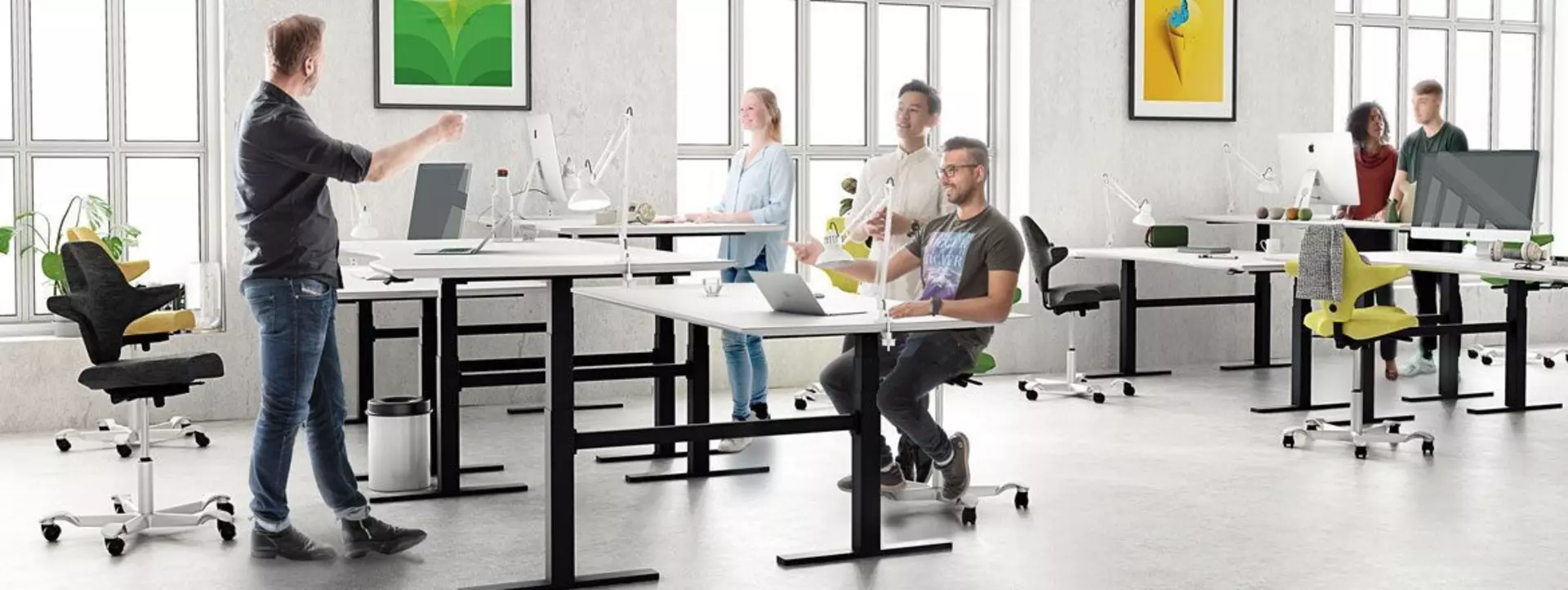
Versatility is essential when designing an office where you try to maximize space. What seems like a multi-decade trend is continuing to be a challenge for businesses. How do you get the most out of office spaces that seem to get smaller and smaller?
According to figures published by CBS News, offices were expected to average 151 square feet (14 square meters) per employee in 2017 – a significant decline from 225 square feet (21 square meters) in 2010.
This is where bench systems come in. Bench systems connect what would have been two or more free-standing desks, and reduce the space wasted on wiring/cables, individual computer hubs, dividers, and even the room needed for an improved look, appeal and cleaning.
If the bench is mobile, battery-powered lifting columns can make sure that your desk area location is as flexible as possible. Allowing for continued sit-stand movement no matter where your benching system moves.
All-in-all, you give office designers the freedom to make more open and fluid arrangements with quality bench systems.
Adding more options for the desk user
You can add an even newer level of employee-focused innovation, bringing movement to benching systems. With products like LINAK® DESKLIFT™ lifting columns, which offer benching brackets as an option, building sit-stand bench desks becomes much easier.