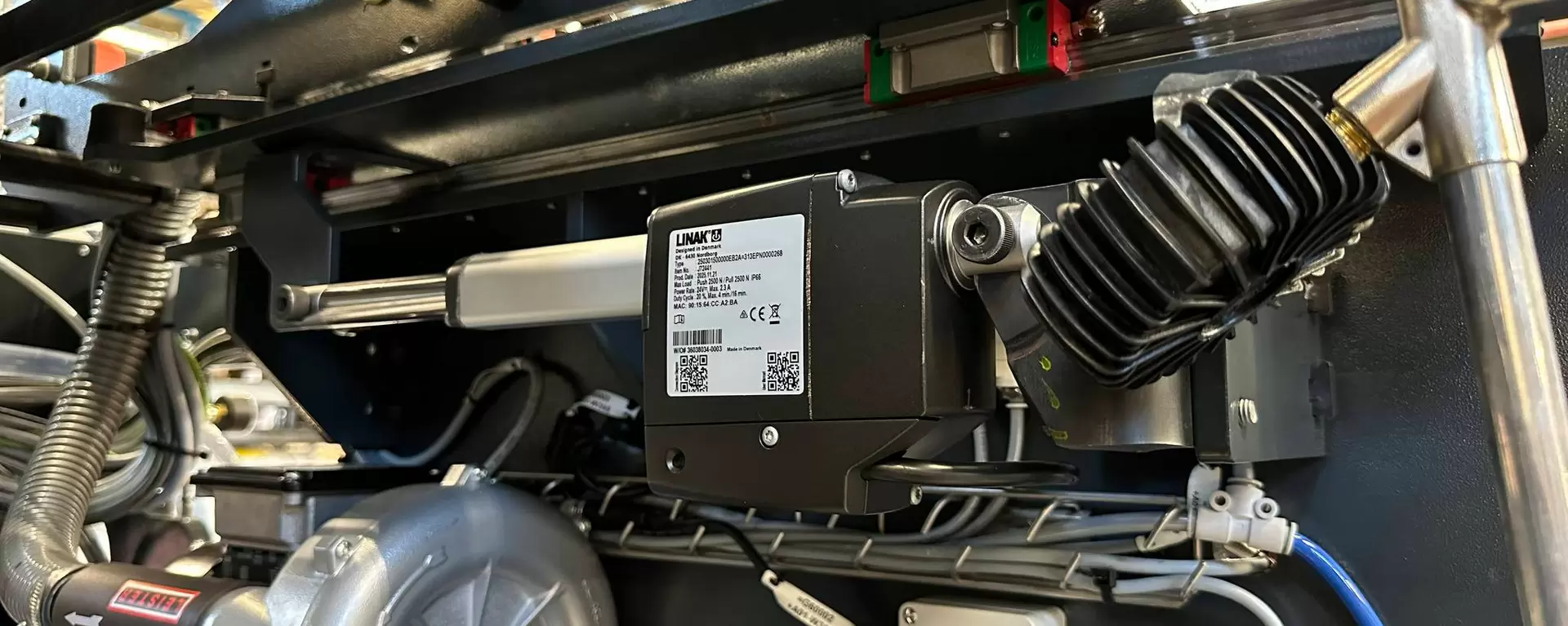
The result is packaging machines that adjust consistently across product variants and are easier for automation engineers to commission, scale, and support over time.
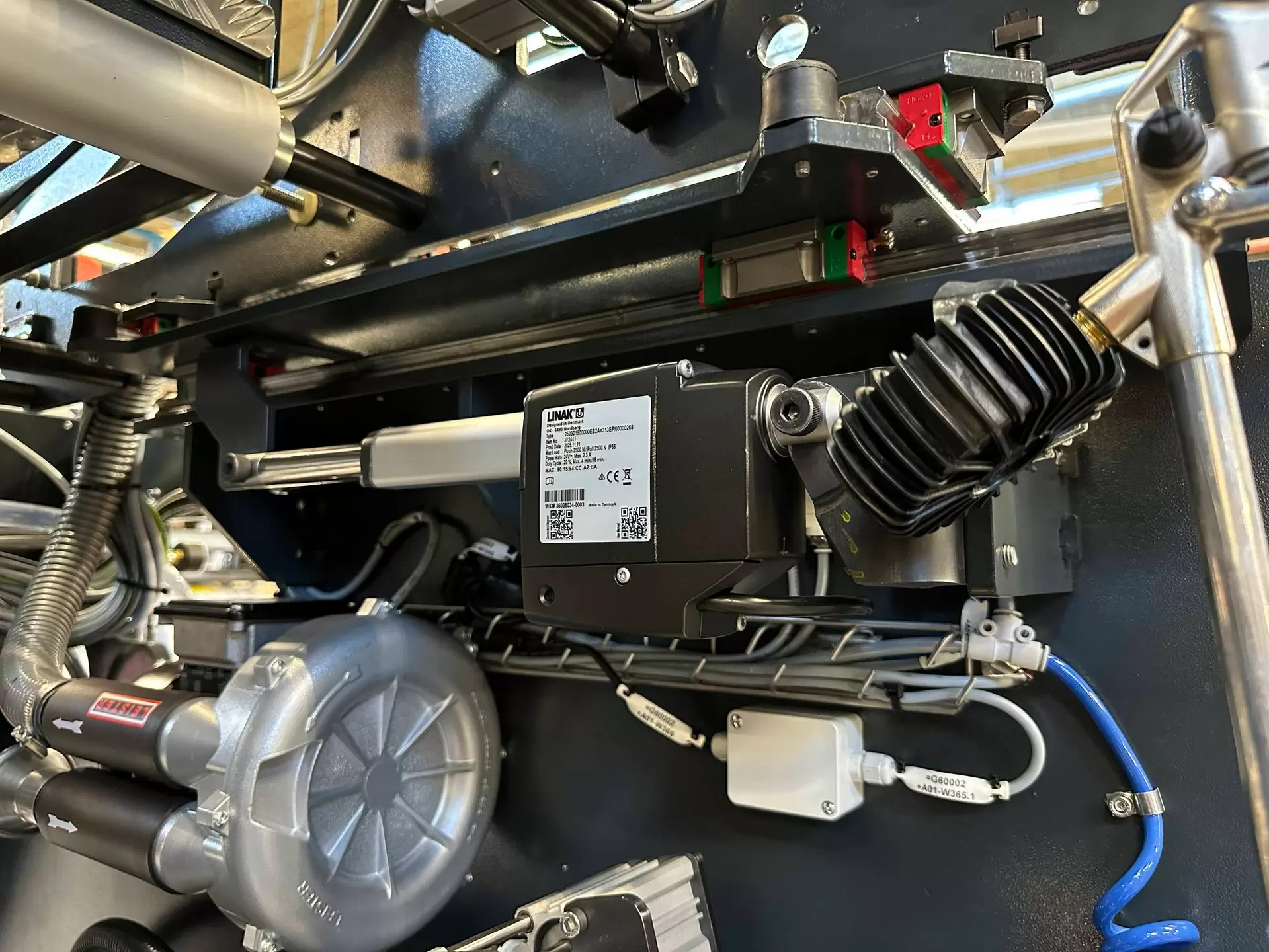
Schur Automation A/S builds advanced packaging machines for production environments where flexibility and uptime are critical. Customers expect to run many different products on the same machine—and to change between different types quickly and reliably. To meet these demands, Schur has improved machine behavior by integrating LINAK LA25 actuators with EtherNet/IP support directly into the control architecture.
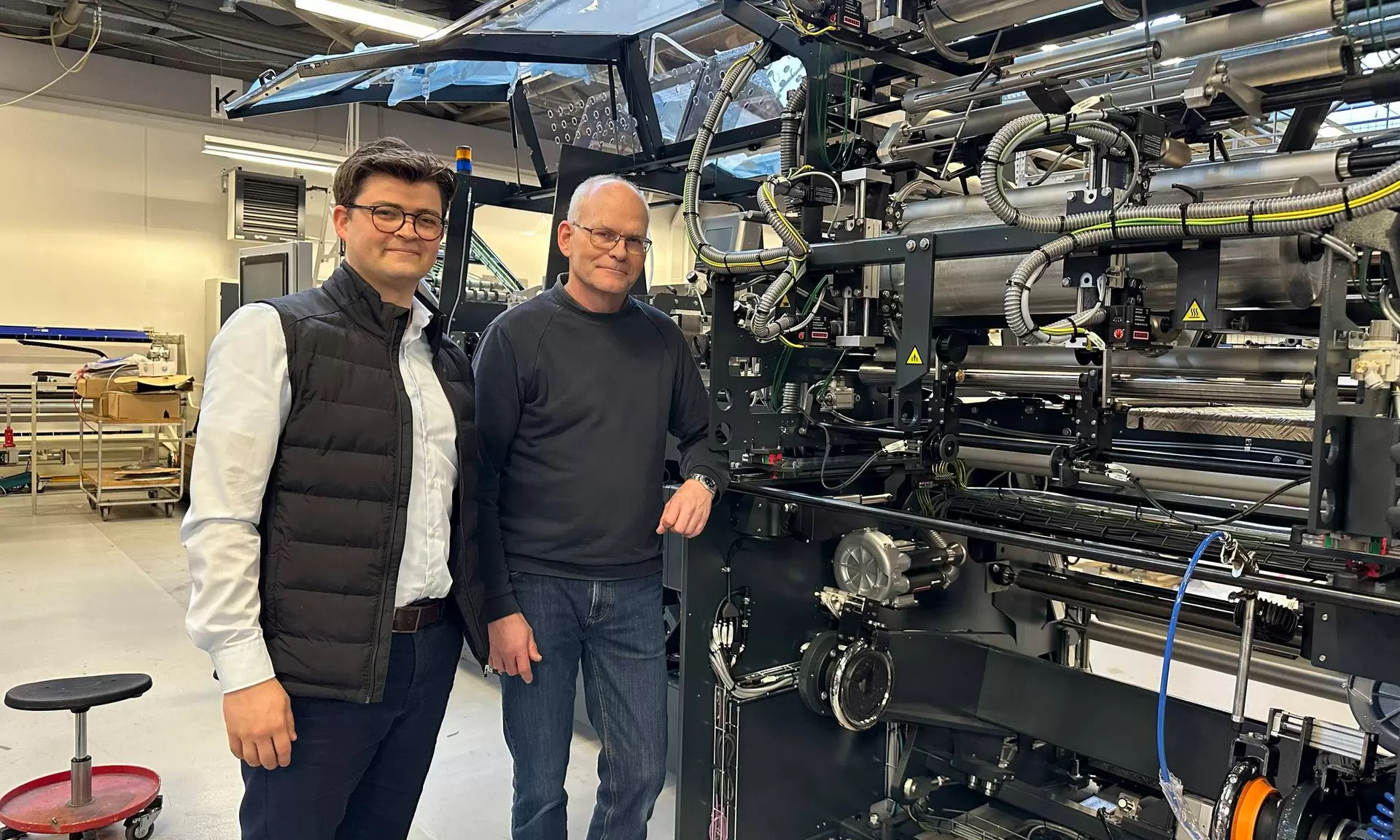
In the following, Lars V. Nielsen, Senior Software Engineer at Schur Automation A/S, shares his perspectives on the challenges faced—and the benefits achieved.
Schur Automation A/S
Application: Packaging machine
Products in use: LA25, EtherNet/IP
Country: Denmark
Built on a familiar automation platform
Schur designs its machines around a well-defined automation platform, where EtherNet/IP is the preferred network and Schneider Electric components are a natural part of the control architecture. Consistency in network, engineering tools, and components is key to keeping both engineering and service work efficient.
“When we select components, we always consider how much software integration work they will require.”
Selecting actuators with native EtherNet/IP support allows linear motion to fit naturally into the existing PLC architecture, avoiding custom interface work and the need to program synchronization logic from scratch.
“With other solutions, we had to build the connection ourselves. Here, everything just fit together and the setup was seamless.”
The challenge
Predictable changeover with less engineering effort
Predictable changeover requires removing variation caused by manual adjustment. Instead, Schur decided to integrate adjustment directly into the automation system.
“Manual handwheel adjustments lack precision, and mechanical play often impacts the result.”
Mechanical tolerances made repeatability difficult and turned setup into a process that required tuning rather than execution. That experience clarified the direction forward.
Schur defined three clear requirements for the actuator solution – requirements that ultimately led to the choice of LINAK.



The solution
While the actuator was selected primarily for precision, built-in parallel control, and EtherNet/IP integration, full integration also had other benefits: easier commissioning and simpler, more transparent troubleshooting.
Troubleshooting made easier through network integration
When the actuator is integrated directly into the machine’s control system, troubleshooting becomes far more efficient than with disconnected components.
“If the system is not connected, you may end up doing a FaceTime call and asking the customer to show what is happening.”
By having the actuator communicate directly on the EtherNet/IP network, Schur’s engineers and users gain immediate insight into machine behavior through the automation system, making it easier to support uptime across globally installed machines.
“Over the past two years, I have only traveled a few times, even though I support customers worldwide remotely.”
Future-proof
When what works becomes the standard Using a proven solution makes commissioning more predictable. By encapsulating LINAK actuator control in a reusable PLC function block, Schur has turned actuator integration into a known and repeatable task—regardless of which LINAK actuator model may be required in future machines.
This predictability matters in everyday engineering work, where software integration effort can be difficult to estimate when new components are introduced.
“Sometimes integration takes one day—other times it takes fourteen days. It can be difficult to estimate.”
By reusing a solution that is already tested, understood, and aligned with the existing automation architecture, Schur reduces uncertainty in commissioning. Planning becomes more reliable, integration risk is lowered, and engineering time can be focused on machine performance rather than on making components work together.
